
Pet Ultrasounds and Echocardiograms in Gardena, CA
For clear answers to uncertain health issues, South Bay Veterinary Care provides advanced dog ultrasound, cat ultrasound, and pet echocardiogram services, enabling us to evaluate internal organs and heart function with greater detail while supporting timely, informed treatment decisions.
What Are Pet Ultrasounds & Echocardiograms?
Ultrasound is a non-invasive imaging technique that uses sound waves to create real-time images of your pet’s internal organs and soft tissues. Unlike X-rays, which are best for evaluating bones and dense structures, ultrasound allows veterinarians to examine organs, fluid movement, tissue texture, and internal function in greater detail.
A pet echocardiogram is a specialized ultrasound focused specifically on the heart. It helps evaluate heart size, function, blood flow, valve performance, and potential cardiac disease.
At South Bay Veterinary Care, ultrasound and echocardiogram services are provided through experienced specialists to ensure accurate interpretation and individualized recommendations for your pet.
What to Expect During a Pet Ultrasound
Ultrasound appointments are designed to be safe, gentle, and minimally stressful for pets.

Non-Invasive Imaging
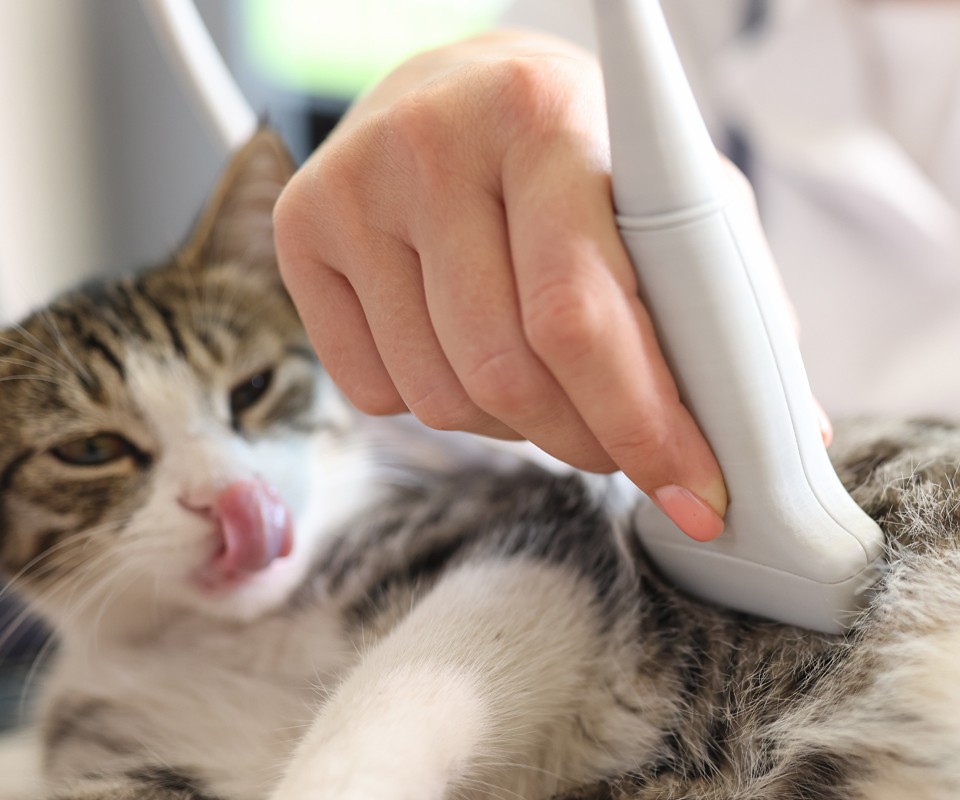
Most ultrasounds do not require surgery or invasive procedures. During imaging, a small area of fur may be shaved to improve image quality, and a handheld probe is used to capture detailed images of internal structures.

Real-Time Evaluation
Ultrasound provides live imaging, allowing specialists to evaluate organ movement, tissue appearance, and blood flow in real time. This can be especially valuable when diagnosing soft tissue conditions or monitoring disease progression.

Echocardiogram Evaluation
During a pet echocardiogram, the heart is carefully evaluated for structural and functional abnormalities. These studies can help diagnose conditions such as heart enlargement, valve disease, congenital defects, or cardiomyopathy.

Specialist Collaboration
At South Bay Veterinary Care, ultrasound and echocardiogram studies are performed through trusted specialists so your pet receives advanced diagnostic interpretation and treatment guidance tailored to their specific condition.
When Are Ultrasounds Recommended?
A vet ultrasound may be recommended when additional imaging is needed beyond physical examination or X-rays. Ultrasound can help identify internal abnormalities and guide treatment planning for many medical concerns.
Common reasons pets may need ultrasound imaging include:
- Vomiting or digestive issues
- Abdominal pain or swelling
- Changes in appetite or weight
- Organ abnormalities
- Fluid accumulation
- Pregnancy evaluation
- Urinary concerns
- Detection of masses or internal abnormalities
A pet echocardiogram may be recommended for:
- Heart murmurs
- Irregular heart rhythms
- Breathing difficulties
- Suspected heart disease
- Monitoring known cardiac conditions
These services are often used alongside Pet In-House Diagnostics and Pet Radiology (X-Rays) to provide a more complete diagnostic picture.
Advanced Imaging Supported by Collaborative Care
At South Bay Veterinary Care, we believe pets deserve access to thoughtful, thorough diagnostic evaluation when health concerns arise. Our team works closely with experienced specialists to provide advanced vet ultrasound and cardiac imaging services while maintaining the personalized, relationship-based care our clients trust.
By combining modern imaging technology, specialist collaboration, and individualized medical guidance, we help dogs and cats throughout the greater Gardena area receive diagnostic support tailored to their unique health needs.
FAQs About Pet Ultrasounds & Echocardiograms
What is the difference between an ultrasound and an X-ray?
X-rays are best for evaluating bones and dense structures, while ultrasound is better suited for examining soft tissues, organs, fluid movement, and heart function. These imaging tools are often used together to provide a more complete understanding of your pet’s condition.
Does my pet need sedation for an ultrasound?
Most pets do not require sedation for ultrasound imaging. Because the procedure is non-invasive and painless, many pets tolerate it well while lying comfortably during the exam. In some cases, mild sedation may be recommended if a pet is very anxious or uncomfortable.
How long does a pet ultrasound take?
The length of the procedure depends on the area being evaluated and the complexity of the case, but most ultrasounds take approximately 30–60 minutes.
What can a pet echocardiogram diagnose?
A pet echocardiogram can help diagnose heart murmurs, valve disease, heart enlargement, congenital heart defects, cardiomyopathy, fluid accumulation, and other cardiac abnormalities affecting heart function and blood flow.
Is ultrasound safe for pets?
Yes. Ultrasound uses sound waves rather than radiation and is considered extremely safe and non-invasive for dogs and cats.
Will my pet need shaved fur for the ultrasound?
Yes, a small area of fur is often shaved to allow better contact between the ultrasound probe and the skin, which improves image quality and diagnostic accuracy.
Can ultrasound detect cancer or tumors?
Ultrasound can help identify abnormal masses, enlarged organs, or fluid accumulation that may indicate cancer or other disease processes. Additional testing, biopsies, or specialist evaluation may still be needed for a definitive diagnosis.
Why would my veterinarian recommend an echocardiogram?
An echocardiogram may be recommended if your pet has a heart murmur, abnormal breathing, fainting episodes, or signs of heart disease. It allows specialists to evaluate how the heart is functioning and guide treatment recommendations more accurately.

Advanced Imaging That Supports Better Veterinary Care
Ultrasound and cardiac imaging provide valuable insight into conditions that may not be visible through examination alone. At South Bay Veterinary Care, our dog ultrasound, cat ultrasound, and pet echocardiogram services help support earlier diagnosis, more accurate treatment planning, and ongoing monitoring for dogs and cats with complex medical concerns. Through collaboration with trusted specialists and a commitment to individualized care, we help local pet owners better understand their pet’s health while supporting informed, compassionate medical decisions.